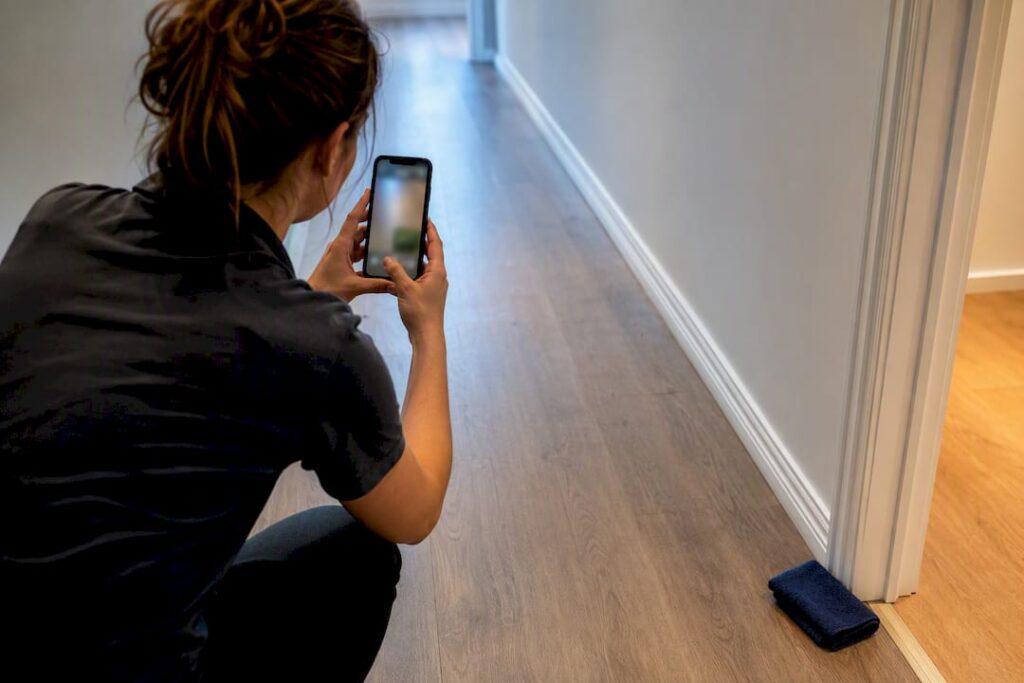
That is where bond cleaning photo evidence can help. Clear, well-organised photographs give you a visual record of your property’s condition after cleaning. When combined with your entry condition report, relevant receipts and written communication, they can help you explain what was cleaned and document the condition in which you handed the property back.
Whether you clean the property yourself or hire a professional, this guide explains how to take useful end-of-lease cleaning photos, what to photograph in each room, how to organise your files and what to consider before booking a bond clean in Sydney.
You’ll also find a practical exit inspection checklist, transparent cleaning-price information and advice on what photographs can and cannot establish.
Table of Contents
- What Is Bond Cleaning Photo Evidence?
- How to Take Useful End-of-Lease Cleaning Photos
- Bond Clean Before-and-After Photos: Room-by-Room Checklist
- How to Organise and Send Your Photos
- Rental Property Exit Inspection Checklist NSW
- Bond Cleaning Prices in Sydney
- When Professional Bond Cleaning May Help
- Who Should Reconsider or Look Elsewhere?
- Common Photo-Evidence Mistakes to Avoid
- Frequently Asked Questions
- Your Next Steps Before Key Handover
What Is Bond Cleaning Photo Evidence?
Bond cleaning photo evidence is a collection of photographs documenting the condition of a rental property around the end of a tenancy. For tenants, this usually means taking clear photographs after cleaning and before handing back the keys. Depending on the circumstances, it can also include photographs taken before cleaning, images showing pre-existing marks, and comparisons with the property’s original condition report.
The aim is to create an organised record rather than simply fill your phone’s camera roll with pictures.
Why do end-of-lease cleaning photos matter?
Photographs can help you:
- Document the condition of kitchens, bathrooms, bedrooms and other areas.
- Record the appearance of appliances, cupboards, floors and windows after cleaning.
- Compare the property’s condition with earlier photographs.
- Support your account of when and how the property was cleaned.
- Keep a visual record alongside your cleaning invoice and relevant correspondence.
In NSW, the entry condition report is an important record of the property’s condition at the beginning of a tenancy. The condition at the end can be compared with that original record. The NSW Government explains the importance of leaving the property in an appropriate condition and conducting the final inspection. NSW Government
An important distinction: Photographs can document visible conditions, but they do not automatically prove who caused a mark, whether every cleaning requirement has been met or whether the landlord will release the bond.
The most useful approach is to combine clear images with relevant records and accurate written descriptions.
How to Take Useful End-of-Lease Cleaning Photos
Good photographs do not need expensive equipment. A smartphone is usually sufficient if you take the time to document each area properly.
1. Photograph the property after it is cleaned
Take your main set of photographs once the cleaning is finished and the property is ready for inspection. Where possible, wait until the floors have dried and any remaining rubbish or personal belongings have been removed. If you are photographing an area before cleaning as well, keep the original images so you can compare the two conditions later.
2. Take wide shots and close-ups
Use two types of photographs.
Wide shots show the overall condition of a room or area. For example, a wide kitchen photograph can show the benchtops, sink, cupboards and flooring together.
Close-ups show specific details, such as the inside of an oven, a clean shower screen, a window track or a mark on a wall.
Together, these images provide more context than a series of close-ups without any indication of where they were taken.
3. Use good lighting
Turn on the lights, open the blinds where possible and hold the camera steady. Take photographs from angles that show the actual surface rather than reflections or glare. Bathroom glass, polished benchtops and windows can be difficult to photograph clearly if the light is positioned poorly.
Avoid filters or edits that could misrepresent the property’s condition.
4. Keep the photographs dated and organised
Your phone may record the date and time of a photograph in its file information. Keep the original files rather than relying exclusively on screenshots or edited copies. Organise the images by room and retain the relevant cleaning receipt, booking confirmation and correspondence.
The NSW Government’s tenancy resources recommend photographs as a useful way to document property condition. Photographs should complement, not replace, the condition report. NSW Government
5. Match your photographs to the inspection checklist
If your property manager has provided an exit inspection checklist, use its room order as your guide. For example, photograph the kitchen first, then the bathrooms, bedrooms, living areas and any additional spaces. This makes it easier to identify which images relate to which part of the property.
If you have a specific cleaning concern, take an additional photograph that shows the relevant area clearly.
Bond Clean Before-and-After Photos: Room-by-Room Checklist
Use the following checklist to plan your end-of-lease cleaning evidence. You do not need dozens of nearly identical photographs. Aim for clear images that cover each important area.
Kitchen and appliances
The kitchen deserves particular attention because it contains multiple surfaces, fixtures and appliances.
Photograph:
- Benchtops and splashbacks.
- The cooktop and rangehood.
- The inside of the oven, where accessible.
- The sink and taps.
- Cupboards and drawers.
- Visible appliance interiors where they have been cleaned.
- The kitchen floor and skirting boards.
Take a wide shot of the overall kitchen, followed by close-ups of the oven, sink and other relevant details. If a permanent stain or damaged surface remains, document it accurately rather than attempting to make it look clean through editing.
Bathrooms and toilets
Bathrooms contain glass, tiles, taps and other surfaces that can be difficult to photograph under poor lighting.
Include photographs of:
- Shower screens and glass.
- Tiles and visible grout.
- The shower recess and tracks.
- The vanity, basin and taps.
- Mirrors.
- The toilet and surrounding floor.
- Bathroom cupboards and storage.
- Visible exhaust-fan covers.
Take at least one wide shot showing the bathroom’s overall condition and additional images of areas that may be difficult to see from the doorway.
Bedrooms and living areas
Once furniture and belongings have been removed, photograph each room from the doorway or another position that captures most of the space.
Include:
- Floors and visible carpet surfaces.
- Skirting boards.
- Doors and door frames.
- Built-in wardrobes.
- Cupboard interiors and shelves.
- Accessible window sills and tracks.
- Visible switches and fixtures.
- Any existing marks that need to be documented.
A photograph of an empty room provides context, while close-ups can document the condition of particular surfaces.
Floors, windows and storage
These areas can be overlooked when people focus mainly on kitchens and bathrooms.
Check:
- Hard floors and carpeted areas.
- Interior window glass.
- Window frames and tracks.
- Accessible storage spaces.
- Cupboard interiors.
- Wardrobe shelves and rails.
- Hallways and stairs, where applicable.
If carpet steam cleaning is part of your booking, retain the relevant receipt and photograph the carpet after the work is completed. A photograph may show the carpet’s visible appearance, but it cannot independently verify every aspect of the cleaning process.
Balconies, garages and shared spaces
If your tenancy includes a balcony, garage, courtyard or other area that needs attention, include it in your photographic record. Photograph the overall area and any relevant surfaces that have been cleaned.
For apartments in Sydney strata buildings, also check whether your building has practical requirements for lift access, loading areas or contractor access. These are separate from the photographic record but can affect the timing of your move.
Only document areas you are responsible for or have permission to access.
Quick photographic checklist
| Area | Main photograph | Additional close-up |
|---|---|---|
| Kitchen | Overall room | Oven, sink and cooktop |
| Bathroom | Overall bathroom | Shower glass, taps and vanity |
| Bedroom | Empty room | Wardrobe and flooring |
| Living room | Overall room | Skirting boards and visible marks |
| Windows | Window and surrounding area | Tracks and sills |
| Carpet | Overall floor | Relevant stains or visible condition |
| Balcony or garage | Overall space | Specific areas requiring attention |
The precise number of photographs depends on the size and layout of the property.
How to Organise and Send Your Photos
Taking the photographs is only part of the process. You should also make sure you can find the right image when you need it.
Create a simple folder structure
For example:
01-Kitchen02-Bathrooms03-Bedrooms04-Living-Areas05-Windows-and-Floors06-Balcony-and-Garage
Keep the original files in their original format where possible.
If you also take photographs before cleaning, use separate folders or clear filenames to distinguish the two sets.
Keep your supporting records together
Your documentation folder can also include:
- The entry condition report.
- The completed cleaning invoice or receipt.
- Your cleaning booking confirmation.
- Any agreed cleaning checklist.
- Emails or messages about inspection requirements.
- Relevant photographs of pre-existing marks.
Keep a backup of important files.
If you send photographs by email, retain a copy of the sent message. If you use a messaging app or shared folder, check that the recipient can access the files and that the original images remain safely stored.
When should you send the photographs?
A practical approach is to take the final photographs after cleaning and before returning the keys, then organise and send any requested documentation before or around the final inspection. If your property manager has asked for particular photographs, follow their instructions about the required format and delivery method.
Keep the original images even after sending them.
Remember that photographs are supporting documentation, not a substitute for completing the required handover process.
Rental Property Exit Inspection Checklist NSW
A photographic record is more useful when it forms part of a broader move-out plan.
The following checklist brings together cleaning, documentation and handover preparation.
| Task | What to do | When |
|---|---|---|
| Review the condition report | Locate your original entry condition report and photographs | Before moving out |
| Confirm cleaning requirements | Check your property manager’s instructions and the agreed scope | Before booking |
| Arrange the cleaning | Confirm the service, property details and handover date | As early as practical |
| Remove belongings | Empty the property and make agreed cleaning areas accessible | Before the clean |
| Complete the clean | Finish the agreed DIY or professional cleaning work | Before inspection |
| Take photographs | Document rooms and relevant details after cleaning | Before key handover |
| Save supporting records | Retain photographs, receipts and correspondence | Immediately after cleaning |
| Attend the inspection if possible | Arrange a suitable time with the property manager | At handover |
| Return keys and access devices | Follow the agreed handover process | By the required time |
The NSW Government advises tenants to leave the property clean and empty, return keys and other security devices, and participate in the final inspection process where possible. NSW Government
Plan around your moving date
Try to schedule the clean after furniture and personal belongings have been removed. This makes it easier to access floors, cupboards and other surfaces. If you are hiring professional cleaners, tell them your key handover and inspection dates when requesting a quotation. Allow enough time to review the finished property and take your photographs before access becomes difficult.
For apartments, check any relevant strata arrangements early. Lift bookings, loading-dock availability and access restrictions can affect your moving schedule.
Understand what the photographs can prove
A photograph may show that an oven appears clean at a particular time. It does not automatically prove the oven was in the same condition at the beginning of the tenancy or that every requirement in the agreement has been met. Likewise, a photograph of a wall mark cannot necessarily establish when the mark appeared or who caused it.
Use your photographs alongside the condition report and other relevant records. If you have questions about tenancy requirements or a bond dispute, consult NSW Fair Trading rather than relying on a cleaning company for legal advice.
Bond Cleaning Prices in Sydney
Your photographic checklist helps you document the property’s condition. Your cleaning budget helps you decide whether to do the work yourself or arrange professional assistance.
Bond Cleaning Sydney publishes pricing for several end-of-lease cleaning configurations and optional services. The figures below reproduce the requested prices from the business brief, with a verification qualification because the live website currently displays conflicting information for some items.
Published bond cleaning prices
| Property configuration | Price in supplied business brief |
|---|---|
| 1 bedroom, 1 bathroom | $340 |
| 2 bedrooms, 1 bathroom | $400 |
| 3 bedrooms, 2 bathrooms | $473 |
| 4 bedrooms, 2 bathrooms | $553 |
| 4 bedrooms, 3 bathrooms | $586 |
Other published cleaning prices
| Service | Price in supplied business brief |
|---|---|
| General cleaning | From $139 |
| Deep cleaning | From $209 |
| Weekly regular cleaning | $118.15 |
| Carpet steam cleaning | $88 per room |
| Oven cleaning | $60 |
| Interior windows | $62 |
| Blinds | $15 per fixture |
| Garage cleaning | $30 |
Price verification notice: These figures are reproduced from the supplied business brief, not represented as a fully reconciled live price list. The live pricing page confirms the five listed bond-clean configurations, $118.15 weekly regular cleaning, $60 oven cleaning, $15-per-fixture blinds cleaning, $62 interior window cleaning for the specified smaller property categories, and $30 garage cleaning. However, the website also lists carpet cleaning at $88 per room in its carpet-cleaning table and $90 per room or area in its add-on table. The homepage advertises end-of-lease cleaning from $360. Resolve these discrepancies before publishing the table as current verified pricing. Bond cleaning pty ltd
Check the current prices: View Bond Cleaning Sydney’s pricing page.
What can affect your quotation?
The property’s size, number of bedrooms and bathrooms, condition and additional cleaning requirements may affect the final quotation. Optional work may also need to be considered separately. For example, a tenant may want to discuss carpet steam cleaning or oven cleaning when requesting a bond clean. Confirm which services are included in your particular booking rather than assuming every additional task is part of the base price.
Planning a Sydney move? Request an upfront quotation from Bond Cleaning Sydney and provide your property details, preferred date and any specific cleaning requirements.
When Professional Bond Cleaning May Help
Cleaning a rental property before the final inspection can be time-consuming, particularly when you are also arranging removalists, utility changes and key handover.
A professional end-of-lease clean may be worth considering if:
- You have limited time between moving out and the final inspection.
- The property has multiple bathrooms or a large kitchen.
- Oven cleaning, cupboard interiors or window tracks need additional attention.
- You would prefer to outsource the cleaning while concentrating on other moving tasks.
- You want an upfront quotation for the agreed cleaning scope.
Bond Cleaning Sydney offers end-of-lease cleaning, move-out cleaning and additional services such as carpet steam cleaning. Its published service information focuses on preparing rental properties for final inspections. Bond cleaning pty ltd
Before booking, confirm the areas covered, any extra charges, the handover date and the applicable terms.
What about cleaning photographs from your cleaner?
Do not assume that every cleaning company automatically supplies a photographic report. Ask whether photographs are available, whether they are included in the quoted service and how they will be delivered. If photographs are important to you, make this part of your booking discussion.
You should still take your own photographs after the work is finished. That way, you retain a personal record regardless of the company’s documentation arrangements.
Understand the 72-hour re-clean guarantee
Bond Cleaning Sydney publishes a 72-hour re-clean bond-back guarantee for eligible cleaning-related issues covered by its terms. The distinction matters: the guarantee concerns returning to address eligible cleaning issues. It does not determine whether your landlord or property manager will release your rental bond.
Our 72-hour bond-back guarantee means we’ll return and re-clean anything your agent flags within 72 hours – the final bond release decision always sits with your property manager/agent.
Confirm the applicable terms when booking.
Who Should Reconsider or Look Elsewhere?
A professional bond clean is not necessarily the right solution for every situation.
Renters who can comfortably manage the cleaning themselves
If your property is already in good condition, you have enough time and you can complete the required work, DIY cleaning may be a reasonable option. You can still use the photographic checklist and retain your own supporting records.
People who need specialist services outside the agreed scope
If you need specialist restoration, repairs, rubbish removal or other work that is not part of the quoted cleaning service, confirm whether a suitable specialist is required. Do not assume a standard bond clean includes every type of property work.
Similarly, furnished short-stay or Airbnb turnovers may require specialised linen changes, restocking or guest-turnover arrangements. Confirm those requirements with a provider that explicitly offers the necessary service.
Renters seeking tenancy or legal advice
A cleaning company can explain its cleaning scope and applicable re-clean terms, but it cannot determine every tenancy or bond dispute. If your question concerns tenancy obligations, a disputed deduction or your legal position, consult NSW Fair Trading or another appropriately qualified source.
Common Photo-Evidence Mistakes to Avoid
Even a large collection of photographs can be unhelpful if the images lack context.
Avoid these common mistakes:
Taking only close-ups. Include wide shots so the room and relevant surface can be identified.
Forgetting hidden areas. Check cupboards, oven interiors, window tracks and other areas that may be missed in general room photographs.
Editing photographs to improve their appearance. Keep the original files and avoid changes that misrepresent the property’s condition.
Deleting pre-clean photographs. Before-and-after comparisons may be useful, so retain both sets where available.
Keeping everything in one unlabelled folder. Use room names and descriptive filenames.
Assuming photographs guarantee a bond refund. Photographs are one part of the documentation. They do not control the property manager’s final decision.
Waiting until after returning the keys. You may not have access to the property later, so take your final photographs before handover whenever possible.
Forgetting the paperwork. Keep the condition report, relevant cleaning receipt and correspondence alongside your images.
A simple, organised record is more useful than hundreds of photographs that are difficult to interpret.
Frequently Asked Questions
1. What is bond cleaning photo evidence?
Bond cleaning photo evidence is a collection of photographs documenting the property’s condition before or after cleaning. It may include room-wide images, close-ups of specific surfaces and comparisons with earlier photographs. Keeping the images with your condition report and cleaning receipt provides useful context.
2. Should I take photos after bond cleaning?
Yes. Taking photographs after the clean and before returning the keys gives you a visual record of the property’s condition at handover. Include kitchens, bathrooms, floors, cupboards, windows and other relevant areas. Keep the original files and organise them by room.
3. What should I include in end-of-lease cleaning photos?
Include wide shots of each room and close-ups of relevant details. Common examples are oven interiors, shower screens, cupboard interiors, window tracks, flooring and accessible storage spaces. If an existing mark remains, document it accurately rather than trying to hide it.
4. Are bond clean before-and-after photos enough?
Photographs can be useful supporting documentation, but they are not necessarily sufficient on their own. They should be considered alongside the entry condition report, relevant cleaning receipts, written communication and any other applicable records. A photograph cannot automatically establish when damage occurred or guarantee a particular bond outcome.
5. How should I send cleaning photographs to my real estate agent?
Follow your property manager’s preferred submission method. Email attachments or an accessible shared folder can make the images easier to review. Use clear filenames, retain the original files and keep a copy of your sent communication. If the agent has provided a checklist, arrange the photographs in the same order.
6. How much does bond cleaning cost in Sydney?
Bond Cleaning Sydney’s supplied pricing brief lists bond cleaning at $340 for a one-bedroom, one-bathroom property, $400 for two bedrooms and one bathroom, $473 for three bedrooms and two bathrooms, $553 for four bedrooms and two bathrooms, and $586 for four bedrooms and three bathrooms. However, the live website currently displays a different starting price on its homepage and discrepancies in some other rates. Confirm the current price directly with the company before booking. See the published pricing page.
7. What happens if the agent identifies a cleaning issue after the clean?
Check your booking terms and contact the cleaning company promptly if an eligible cleaning issue is identified. Bond Cleaning Sydney publishes a 72-hour re-clean guarantee for eligible cleaning-related issues covered by its terms.
Our 72-hour bond-back guarantee means we’ll return and re-clean anything your agent flags within 72 hours – the final bond release decision always sits with your property manager/agent. The guarantee is a re-clean promise, not a guarantee that your entire rental bond will be refunded.
8. When should I book a bond clean before handing back the keys?
Arrange the clean early enough to coordinate it with your removalists, building access and inspection date. Cleaning is generally easier once your belongings have been removed. Confirm the cleaning scope and preferred date with your provider, then take your final photographs before returning the keys.
Your Next Steps Before Key Handover
Preparing for a final inspection is easier when you have a clear plan. Clean the property carefully, photograph each room, keep the original files and organise your condition report and cleaning receipt in one place.
If you prefer professional assistance, Bond Cleaning Sydney offers end-of-lease cleaning across Sydney, with upfront quotations and bookings available seven days a week, subject to availability. Its published 72-hour re-clean guarantee covers eligible cleaning-related issues under the applicable terms; it does not guarantee the release of your bond. Bond cleaning pty ltd
For a quotation, call 0420 900 189 or visit the Bond Cleaning Sydney contact page.